
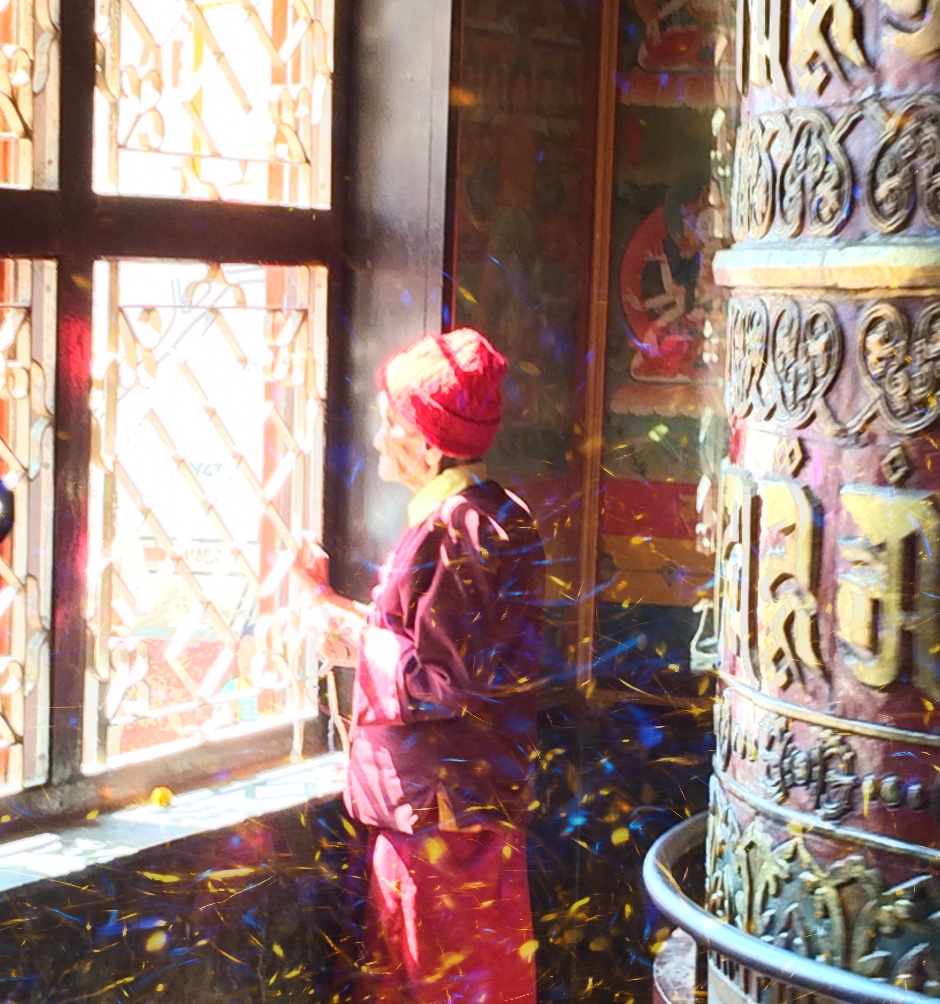

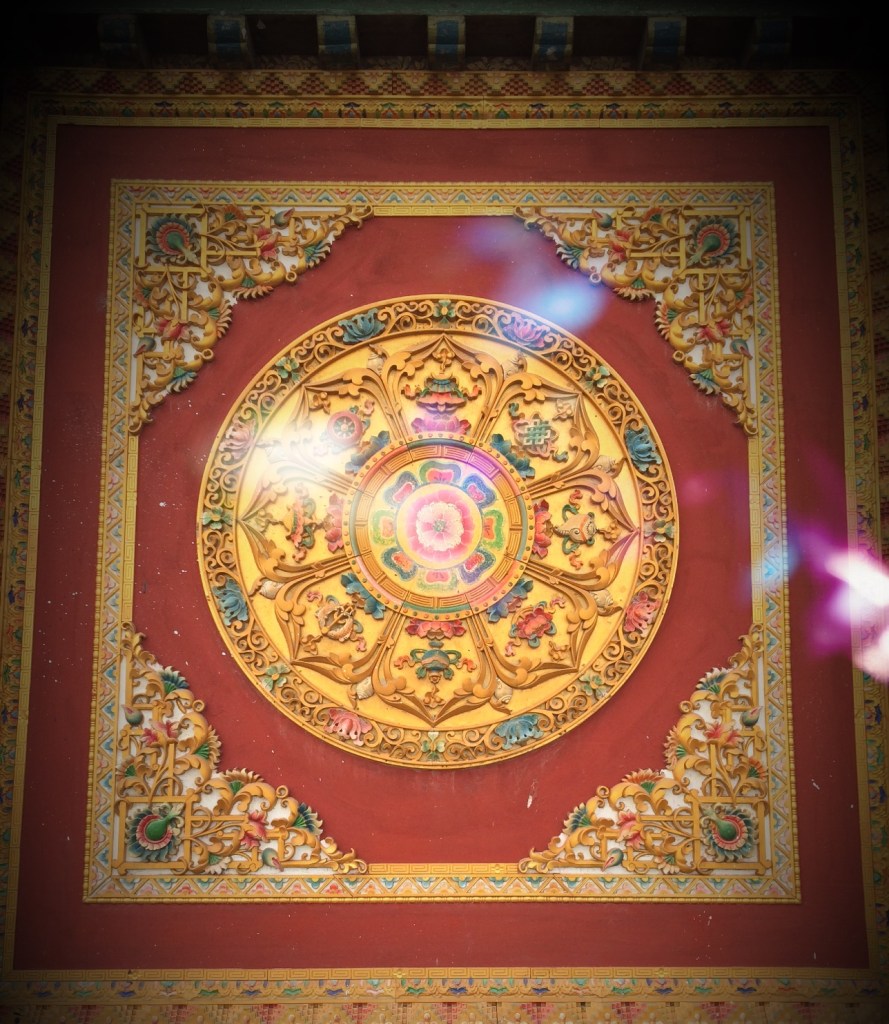
“You are not a human being in search of a spiritual experience. You are a spiritual being immersed in a human experience.“
Pierre Teilhard de Chardin
Trinity Bourne
Blogger and Author: “Kind Earth!“
“(Anastasia Eden) and (her) work is all about compassionate, heart-centred living and profound self-honesty. A reminder that there is a light that flows through all things and that we are all connected. I work through exploring nature, delicious plant-based (and GF) recipes and heart-centred living.
We are all unique and incredible souls, each of us an important part of the ‘whole’.
One breath
One heartbeat
One Love
We are in this together, to inspire each other to rise up, to remind ourselves who we truly are, and to live our hearts deepest longing of unity and heart-centred beingness. (webpage: KindEarth.net, June 29, 2021)
Gautama Buddha
Prince and spiritual leader and philosopher – 5th – 4th BCE – India
Siddhattha Gotama was a philosopher, mendicant, meditator, spiritual teacher, and religious leader who lived in ancient India (c. 5th to 4th century BCE). He is revered as the founder of the world religion of Buddhism and recognized by most Buddhist schools as the Enlightened One who is believed to have transcended Karma and escaped the cycle of birth and rebirth. He taught for around 45 years and built a large following, both monastic and lay. His teaching is based on his insight into duḥkha (typically translated as “suffering”) and the end of duhkha—the state called Nibbāna or Nirvana.
Works About The Buddha:
Bechert, Heinz, ed. (1996). When Did the Buddha Live? The Controversy on the Dating of the Historical Buddha. Delhi: Sri Satguru.
Ñāṇamoli Bhikku (1992). The Life of the Buddha According to the Pali Canon (3rd ed.). Kandy, Sri Lanka: Buddhist Publication Society.
Wagle, Narendra K (1995). Society at the Time of the Buddha (2nd ed.).
Weise, Kai (2013). The Sacred Garden of Lumbini: Perceptions of Buddha’s birthplace.
Jalal ad-Din Muhammad Rumi
Mystic and poet – 13th Century – Persia
Jalāl ad-Dīn Mohammad Rūmī, also known as more popularly simply as Rumi (1207 – 1273), was a 13th-century Persian poet, Islamic scholar, theologian, and mystic originally from Iran.Rumi’s influence transcends national borders and ethnic divisions: Iranians, Tajiks, Turks, Greeks, Pashtuns, other Central Asian Muslims, and the Muslims of the Indian subcontinent have greatly appreciated his spiritual legacy for the past seven centuries. His poems have been widely translated into many of the world’s languages and transposed into various formats. Rumi has been described as the “most popular poet” and the “best selling poet” in the United States.
Works Include:
Ma-Aarif-E-Mathnavi A commentary of the Mathnavi of Maulana Jalaluddin Rumi (R.A.), by Hazrat Maulana Hakim Muhammad Akhtar Saheb (D.B.), 1997.
The Sufi Path of Love: The Spiritual Teachings of Rumi, by William Chittick, Albany: SUNY Press, 1983.
The Mysteries of the Universe and Rumi’s Discoveries on the Majestic Path of Love, by Majid M. Naini, Universal Vision & Research, 2002
The Mesnevi of Mevlâna Jelālu’d-dīn er-Rūmī. Book first, together with some account of the life and acts of the Author, of his ancestors, and of his descendants, illustrated by a selection of characteristic anecdotes, translated and the poetry versified by James W. Redhouse, London: 1881.
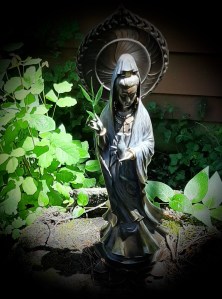
观音 Guan Yin
Bodhisattva for Compassion
The Chinese name “Guanshiyin” means:
“The One Who Perceives the Sounds of the World.”
Lao Tzu (or Lao-Tze) – “Toa Ching”
Sage and mystic – 6th-century BC
Lao Tzu also rendered as Laozi (commonly translated as “Old Master”) was an ancient Chinese philosopher and writer. He is the reputed author of the Tao Te Ching, the founder of philosophical Taoism, and a deity in religious Taoism and traditional Chinese religions.
A semi-legendary figure, Lao Tzu was usually portrayed as a 6th-century BC contemporary of Confucius, but some modern historians consider him to have lived during the Warring States period of the 4th century BC. A central figure in Chinese culture, Laozi is claimed by both the emperors of the Tang dynasty and modern people of the Li surname as a founder of their lineage. Laozi’s work has been embraced by both various anti-authoritarian movements and Chinese Legalism.
Works Referenced Include:
“Toa Ching”
Henricks, Robert G. (1992), Lao Tzu: Te-Tao Ching – A New Translation Based on the Recently Discovered Ma-wang-tui Texts (Classics of Ancient China), New York: Ballantine Books
Klaus, Hilmar (2009), The Tao of Wisdom. Laozi – Daodejing. Chinese–English–German. Aachen: Hochschulverlag, Aachen, Germany: Hochschulverlag
Legge, James, The Tao Teh King, or The Tao and its characteristics
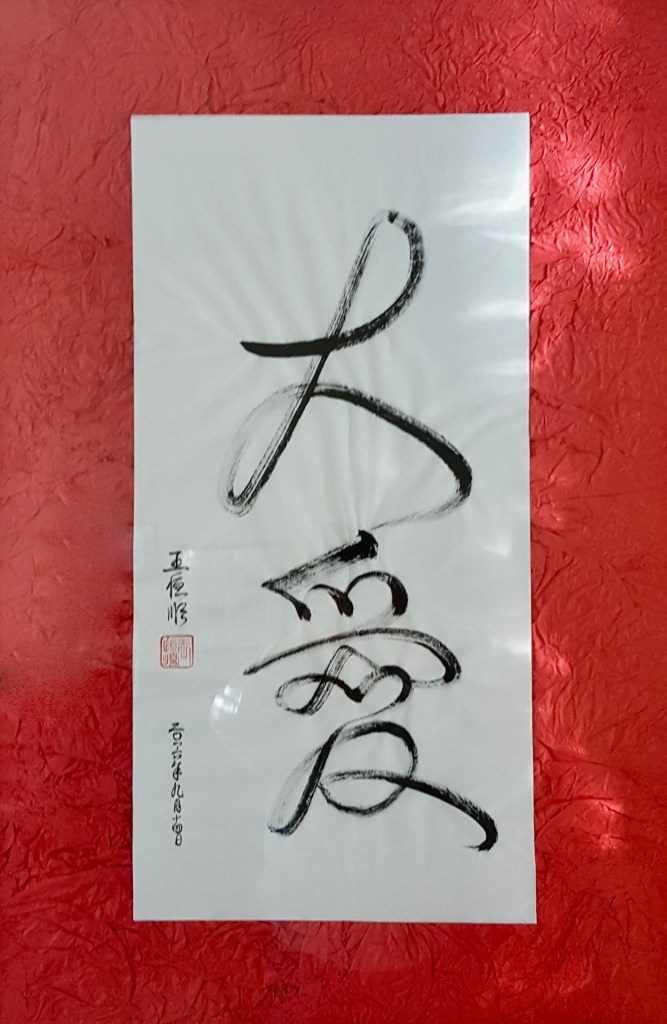
“Greatest Love“
The calligraphy to the left represents the Tao symbol of “Greatest Love” and was presented to SaBella in 2017 by Master Henderson Ong. This particular Virtue of the Tao serves to bring life’s heart, soul and song into harmony.
Meister Eckhart
Christian mystic, theologian and philosopher 14th Century – Germany
Eckhart von Hochheim OP (c. 1260 – c. 1328), was a German theologian, philosopher and mystic, born near Gotha in the Landgraviate of Thuringia (now central Germany) in the Holy Roman Empire.
He was well known for his work with pious lay groups such as the Friends of God and some say was succeeded by his more circumspect disciples John Tauler and Henry Suso. Since the 19th century, he has received renewed attention. He has acquired a status as a great mystic within contemporary popular spirituality, as well as considerable interest from scholars situating him within the medieval scholastic and philosophical tradition.
Works Include:
Meister Eckhart: Die deutschen und lateinischen Werke. (This is the critical edition of Meister Eckhart’s works. The Latin works comprise six volumes, of which five are complete. The Middle High German works comprise five volumes and were completed in 2016).
Meister Eckhart, the German Works: 64 Homilies for the Liturgical Year. I. De Tempore: Introduction, Translation and Notes,
Meister Eckhart, The Essential Sermons, Commentaries, Treatises and Defense, trans. and ed. by Bernard McGinn and Edmund Colledge, New York: Paulist Press and London: SPCK, 1981.
Rainer Maria Rilke
Poet and novelist Bohemia-Austria 19th – 20th Century
René Karl Wilhelm Johann Josef Maria Rilke (1875 – 1926) is “widely recognized as one of the most lyrically intense German-language poets”. He wrote both verse and highly lyrical prose. Several critics have described Rilke’s work as “mystical”. His writings include one novel, several collections of poetry and several volumes of correspondence in which he invokes images that focus on the difficulty of communion with the ineffable in an age of disbelief, solitude and anxiety. These themes position him as a transitional figure between traditional and modernist writers.
Works Include:
Rainer Maria Rilke, Sämtliche Werke in 12 Bänden (Complete Works in 12 Volumes), published by Rilke Archive in association with Ruth Sieber-Rilke, edited by Ernst Zinn. Frankfurt am Main (1976)
Rainer Maria Rilke, Werke (Works). Annotated edition in four volumes with supplementary fifth volume, published by Manfred Engel, Ulrich Fülleborn, Dorothea Lauterbach, Horst Nalewski and August Stahl. Frankfurt am Main and Leipzig (1996 and 2003)Leben und Lieder (Life and Songs) (1894)
Larenopfer (Lares’ Sacrifice) (1895)
Traumgekrönt (Dream-Crowned) (1897)
Advent (Advent) (1898)
Pierre Teilhard de Chardin
Priest, paleontologist, and philosopher – 19th Century – France
Pierre Teilhard de Chardin SJ (1881 – 1955) was a Jesuit priest, scientist, paleontologist, theologian, philosopher and teacher. He was Darwinian in outlook and the author of several influential theological and philosophical books.
He took part in the discovery of Peking Man. He conceived the vitalist idea of the Omega Point. With Vladimir Vernadsky he developed the concept of the noosphere. Teilhard has had a profound influence on the New Age movements and has been described as “perhaps the man most responsible for the spiritualization of evolution in a global and cosmic context”.
Works Include:
Le Phénomène Humain (1955), written 1938–40, scientific exposition of Teilhard’s theory of evolution.
Letters From a Traveler (1956; English translation 1962), written 1923–55.
Le Groupe Zoologique Humain (1956), written 1949, more detailed presentation of Teilhard’s theories.
Le Milieu Divin (1957), spiritual book written 1926–27, in which the author seeks to offer a way for everyday life, i.e. the secular, to be divinized.
Zhi Gang Sha
Zhi Gang Sha was a soul leader and world renowned master healer – 20th Century – China
Sha is a strong promoter of forms of spirituality. He has published 20 books, including ten New York Times bestselling books, including Soul Healing Miracles: Ancient and New Sacred Wisdom, Knowledge, and Practical Techniques for Healing the Spiritual, Mental, Emotional, and Physical Bodies, which has sold more than 300,000 copies since its release in November 2013. His 2014 book, Soul Mind Body Science System, debuted on the Amazon Top 100 Bestseller List.
Sha is a registered acupunturist in Canada. He is also a Tai Chi practitioner. He was the lead acupuncturist for the World Health Organization, has been named Qigong Master of the Year and in 2006 was awarded the Martin Luther King Jr. Commemorative Commission Award for his humanitarian efforts.
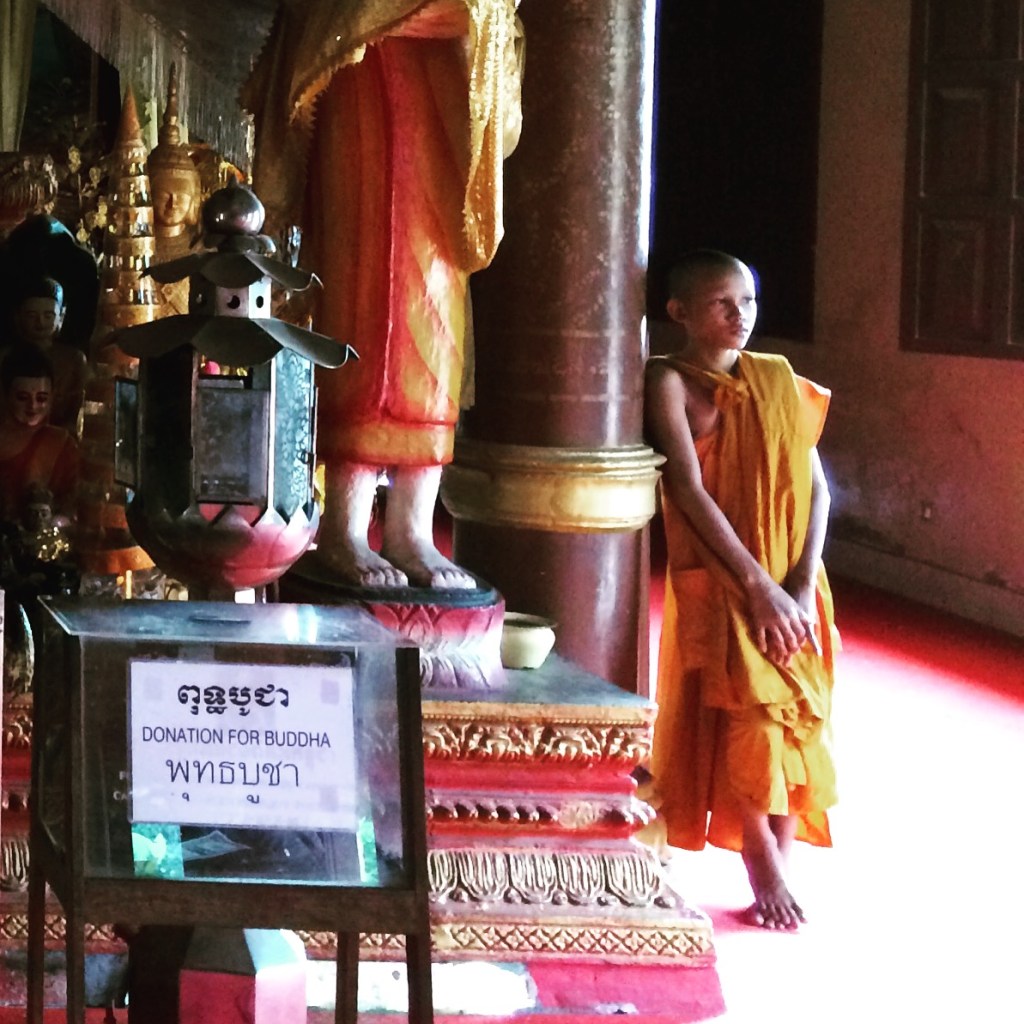

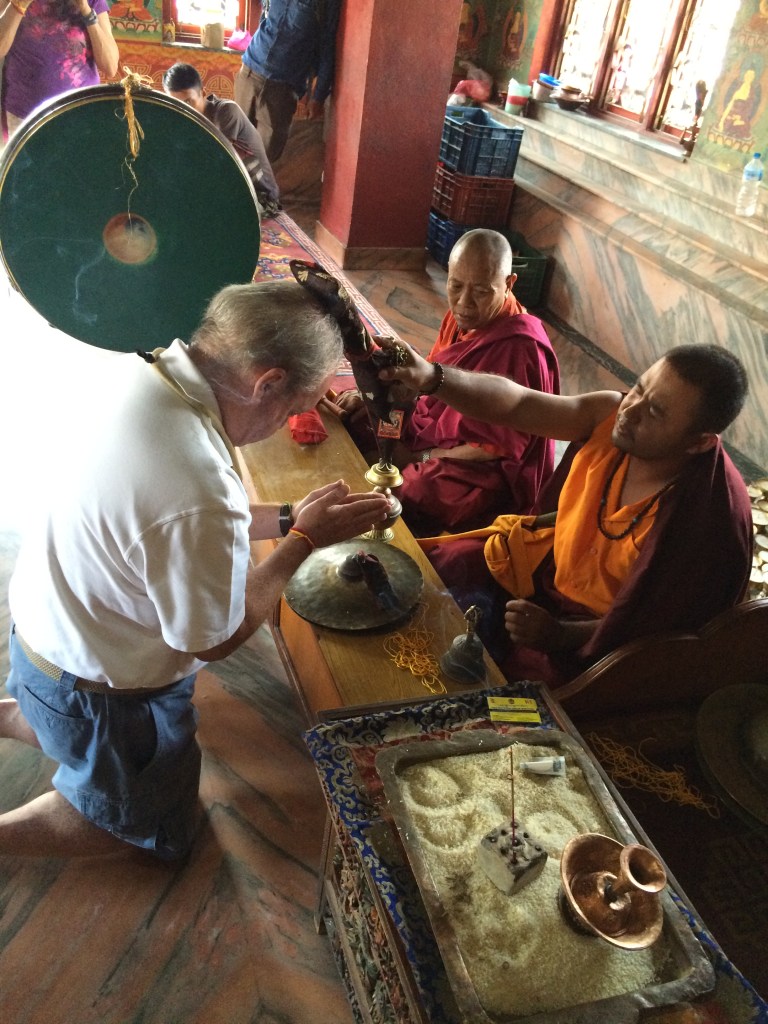
Cambodia, Tibet, Nepal
World Religions Travel Logs
KPS 2015
paulstgermain.site
TEXTUAL CONTENT AND BIOGRAPHICAL ATTRIBUTIONS:
Wikipedia, The Free Encyclopedia, May, June, July, 2021.
Please consider supporting Wikipedia by making a tax-deductible donation to the Wikimedia Foundation at Wikipedia.org.
 Harmonies in Life and Soul